

Last month, we reported on a new proposal made on behalf of DAS Defenders calling on the Walt Disney Company to conduct an independent and public review of its controversial Disability Access Service policy changes. This resolution was originally excluded from shareholder consideration, but now Disney is reversing course and including it in its proxy materials for a vote. Here’s the latest on that, what it means and doesn’t, and why this is happening.
As quick background, Disney overhauled DAS at Walt Disney World and Disneyland back in May 2024. According to the company, the changes were due in large part to abuse, misuse, and proliferation of the program’s use–with issuances of DAS tripling from 2019 to last year. For more about the specifics of the overhauled DAS, see Disability Access Service (DAS) Changes at Walt Disney World FAQ.
The new system has now been in place for well over a year, and there have been direct impacts for disabled guests as well as indirect ones for all guests. To the latter point, we’ve written a lot about the impact of the DAS changes on wait times at Walt Disney World. Most recently, in Is Lightning Lane Multi Pass Still “Worth It” at Disney World? Suffice to say, standby lines are shorter and faster moving, with wait times being lower year-over-year as a result of the DAS crackdown.
Even over 18 months later, the DAS overhaul remains controversial. It’s also a sensitive subject that is personal since it’s make or break for some guests trying to experience Walt Disney World and Disneyland. There have been reports of guests who previously had DAS being denied and advised to use alternative accommodations instead. here have also been a number of small tweaks to DAS over the last year, some of which could be attributed to a pending class action lawsuit.
With that background out of the way, let’s turn to the shareholder proposal. Our previous coverage of this confused some readers, and the latest wrinkle is only going to compound that confusion (just look at that headline–quite the mouthful). Accordingly, we’re going to try to simplify and condense this to the greatest extent possible. Here goes nothing…

Shareholder Resolution
Disney’s brand and financial stability are under strain from underperforming films, rising park costs, consumer boycotts, and waning trust. According to the resolution, a significant contributor to this strain is the company’s recent overhaul of disability accommodations at its parks due to negative media coverage, social media, guests canceling trips and Annual Passes, as well as legal exposure to a class action lawsuit.
As a result of the controversial DAS changes, Disney exposed itself to legal claims, regulatory scrutiny, and brand damage. Other companies have faced multimillion-dollar settlements under accessibility-related actions. Future liabilities could include costly settlements, operational disruption, and weakened market positioning.
Accordingly, shareholder resolution requests that Disney commission an independent review of DAS, conducted by a qualified third party. This review should assess legal, financial, and reputational risks; evaluate Disney’s policies against competitors; and identify opportunities for improvement. The resolution further requests a public summary on the findings for accountability and transparency.

Disney’s Response(s)
In its original response letter from late last year, the Walt Disney Company wrote that it intended to exclude the aforementioned shareholder proposal from the proxy materials for its 2026 annual meeting of shareholders. This meant that shareholders would not vote on whether to approve the resolution for the independent review. Disney also sought assurance of no enforcement action from the SEC following the exclusion.
Disney’s argument for exclusion was that any attendance decrease in the last fiscal year was attributable to hurricanes. Moreover, park operations are ordinary business and not subject to shareholder micromanagement; that they’ve already done their due diligence on the DAS changes, and there’s no duty to disclose any nonpublic information. You can read Disney’s full argument here.
Fast forward to January 2026, and Disney has sent a new letter to the SEC withdrawing its no-action request, meaning that they no longer are seeking any assurances from the SEC. The reason they’re doing this is simple: because they’ve reversed course and decided to include the aforementioned shareholder proposal in their proxy materials for the 2026 annual meeting.
If you’re confused, you’re probably not alone. Here’s what this does and doesn’t mean, along with some quick commentary…

Our Commentary
For starters, this does NOT mean that the Walt Disney Company has suddenly had a change of heart and is agreeing with the shareholder proposal in any way, shape, or form. It does not mean they have agreed to the independent audit being sought.
If that were the case, this would be a different letter entirely; probably a joint statement from Disney and the shareholder (or the advocacy group behind him) indicating that the parties are moving forward with collaborative and constructive efforts on reviewing the DAS changes and current policies. That sort of thing.
Instead, what Disney is saying is that they’re going to let shareholders vote on whether to conduct such a review.

This shareholder proposal will almost certainly be voted down.
One of the reader misconceptions in response to our previous coverage was that this proposal was being driven by investors concerned about the impact of the DAS changes on the company’s financials. It’s probably better viewed as a subset of shareholders framing an issue that’s personally important to them in such a way to make it appropriate for proxy vote; a different angle for contesting the DAS changes, aside from litigation.
Anyone who has listened to the annual meetings knows that there are a lot of politically-charged and niche causes presented. All of them are summarily shot down without much in the way of further discussion.
As a Disney shareholder, I could write a proposal about how the company’s refusal to reimagine Journey into Imagination has resulted in financial strain, underperformance, unrealized earnings, social media backlash, and brand damage. I could cite things like popcorn bucket, merchandise sales, and DTB blog posts in support of my position. It would be a more ‘legitimate’ way of raising the issue (as opposed to during the Q&A), but it would be an equally futile effort.
There’s no reason to believe the fate of this DAS proposal will be any different. While we strongly believe Disney should do a better job at finding a middle ground and have a more delicate touch in handling DAS, it’s hard to see this as something with which shareholders will concern themselves.

One important thing to keep in mind here is that it’s not the individual shareholders who are outcome-determine on things like this. It won’t be plugged-in fans who are sympathetic to the plight of disabled guests casting the deciding votes.
It’s the large institutional ones who are make or break. And although Disney’s stock has underperformed for the last several years, that’s definitely not attributable to the theme parks. If anything, the parks are what is carrying the company and preventing that share price from dipping well below $100.
As we’ve covered in earnings call reports and crowds coverage, attendance was down year-over-year (by about 1%), but that was largely attributable to hurricanes ($120 million disclosed losses). Meanwhile, the parks continue to set revenue records and hotel occupancy continues to rise. Right or wrong, that’s what matters to shareholders.
Simply put, institutional investors like BlackRock, Vanguard, and Fidelity are not going to concern themselves with this. It will be deemed too trivial, and they will accept Disney’s arguments that were laid out above. The shareholder proposal will fail, and it won’t even be a close vote.

Given that, the more curious question from my perspective is why Disney even bothered to exclude the shareholder proposal in the first place? One particularly astute commenter, Jack, offered this explanation in response on the previous post:
First, they’ll have to draft a response in their proxy statement as to why shareholders should vote no on the campaign. This opens up its own can of worms – if they make a material misstatement, they could be liable for false/misleading proxy materials. The legal due diligence to prevent such an error probably isn’t cheap either.
Second, letting the proposal come to vote is far more “public” than asking the SEC to issue a no-action letter. Most Disney tourists and media outlets aren’t going to search through EDGAR to see Disney’s request for non-enforcement from the SEC on this proposal (you are the exception that proves the rule, of course). But I could certainly see far more media attention on this issue if it came up during the annual shareholder meeting. Moreover, they’d be “on the record” as well. Disney can’t just point to Wall Street and say that businessmen voted against the proposal: Disney is the one *telling Wall Street* to vote against it!
Finally, allowing the proposal to move forward would draw more attention to the DAS Defenders and activists proposals in general. As it stands, Disney is taking the position that this proposal isn’t even worth voting on – it’s shareholder micromanagement, substantially overlapping with current plans to review DAS access, etc. If Disney actually responded to the proposal in the proxy statement, it almost legitimizes the opposition. Disney, with its history of hostile activist campaigns since the ’80s and especially recently with Trian, likely doesn’t want to give even one inch here lest other shareholder activists get any ideas about taking a mile.
I found this explanation to be persuasive at the time (and largely still do). Although the no-action request drew some media attention (including from the mainstream), more eyeballs will certainly be on the annual shareholder meeting.
At the same time, there are always a lot of shareholder proposals that are quickly shot down and I seldom (if ever?) see coverage of those. It’s easy to zone out during that section of the call, as anyone who has ever listened can likely tell you. The signal to noise ratio is not so hot during that portion of the meeting.
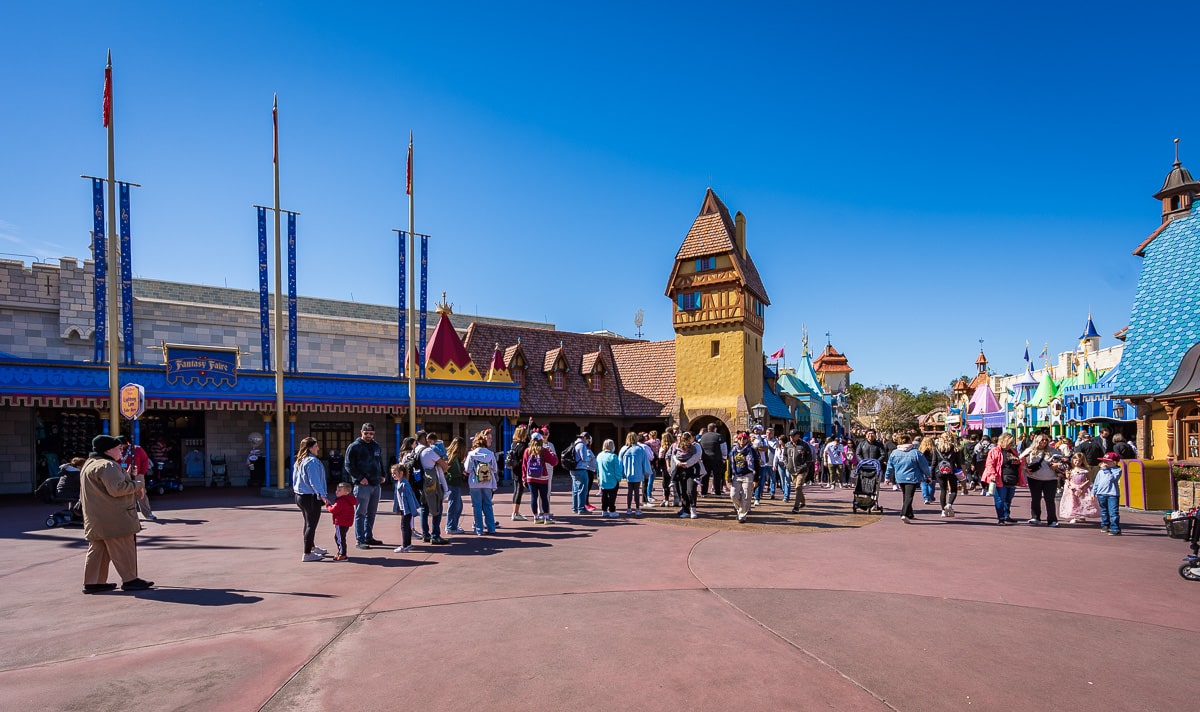
Regardless, it’s odd for Disney to reverse course at this point. Attention has now been drawn to an (likely doomed) shareholder proposal twice, and theoretically will again once the annual meeting rolls around. It makes me wonder what change happened in the background over the course of the last month?
But it’s difficult to imagine the SEC sending informal word that they will take action. It’s also implausible that Disney just now performed due diligence and realized this proposal poses no threat of passing; they would’ve already known that.
Accordingly, I’m not really sure what to make of this. Disney undoubtedly has a compelling reason for this ‘change of heart,’ but I cannot figure out what that might be. It still does not alter the eventual outcome, but it’s nevertheless interesting to watch this play out.
My guess is that Disney’s proxy response will say as little as possible (for the reasons Jack laid out), likely just reiterating the ground covered in their original letter to the SEC. That’s probably all the convincing it’ll take for BlackRock, Vanguard, etc.

Ultimately, we do not anticipate any major changes to DAS at Walt Disney World or Disneyland. Nor do we view there being any likelihood of success with the shareholder proposal. There is not going to be another overhaul to Disability Access Service, absent the aforementioned class action lawsuit or other litigation prevailing.
That happening is also doubtful. Disney has been sued over every single iteration of its disability accommodations, and I’ve yet to find any record of them losing on any count. I can’t see anything different about this lawsuit; if anything, Disney might be able to better argue that lines and crowds are inherent to the theme park experience.
The company has already endured a lengthy PR hit over these changes, there’s no chance they’ll voluntarily endure that again with another overhaul. What, if anything, does happen will be a slow trickle of rule relaxations. But with no major changes in the last several months, even that is now looking increasingly unlikely.

We’ll conclude by once again reiterating our position that Disney should work towards improving DAS. Just because we believe this shareholder proposal is almost certain to fail doesn’t mean we don’t think Disney should take a second-look at its DAS policies. They should.
The company has an exemplary reputation for guest service. The need for DAS reform was absolutely understandable, as there was rampant abuse exacerbated by social media, entitlement, and Disney creating an incentive for DAS scammers by monetizing line-skipping via Lightning Lanes.
There have been heartbreaking stories of DAS denials, and these have made clear that a more flexible and humane approach offering greater discretion to Cast Members is optimal. It seems that Disney went too far with the DAS overhaul; the pendulum swung from one extreme to another.

There has been a lot of collateral damage among disabled guests who needed DAS and have been denied under the overly-stringent system. The DAS changes haven’t just eradicated the scammers, they have hurt guests who are actually disabled. It’s time to recalibrate from the extremes to the center.
The most obvious change we’d like to see is a “humanizing” of the interview, not just expanded rules and policies for the mechanics of that process. We’ve heard from many readers who have been denied, and there’s a word that has been used repeatedly to describe the process: interrogation.
While we can appreciate how stressful this process is for Cast Members and the verbal abuse they take for disgruntled guests, there’s a better way of handling the process that feels less adversarial. Even if the letter of the DAS policies isn’t going to change, the company still should live up to its reputation by finding a gentler way to handle the process.
Planning a Walt Disney World trip? Learn about hotels on our Walt Disney World Hotels Reviews page. For where to eat, read our Walt Disney World Restaurant Reviews. To save money on tickets or determine which type to buy, read our Tips for Saving Money on Walt Disney World Tickets post. Our What to Pack for Disney Trips post takes a unique look at clever items to take. For what to do and when to do it, our Walt Disney World Ride Guides will help. For comprehensive advice, the best place to start is our Walt Disney World Trip Planning Guide for everything you need to know!
YOUR THOUGHTS
Thoughts on the shareholder proposal for an independent review of DAS changes at Walt Disney World and Disneyland? Hopeful that further changes will be made that result in increased approvals for those who truly need DAS while keeping abuse low? Agree or disagree with our assessment of the changes or policy as a whole? Please try to stay on topic–we’ve noticed some of these DAS comments sections get heated and personal. Discuss the policy itself, not others’ use (or lack thereof) of it.
