

OpenAI will kill its Sora artificial intelligence video app, the company revealed in a surprise announcement. Along with that news, the Walt Disney Company’s landmark investment in OpenAI and 3-year licensing agreement to bring characters to Sora and AI shorts to Disney+ is dead. Here’s the latest.
“We’re saying goodbye to Sora. To everyone who created with Sora, shared it, and built community around it: thank you. What you made with Sora mattered, and we know this news is disappointing. We’ll share more soon, including timelines for the app and API and details on preserving your work. ” OpenAI’s Sora team said in a statement on social media.
The announcement comes just three months after Disney made a supposedly groundbreaking deal with OpenAI. Under the three-year licensing agreement, Sora would have been able to generate user-prompted videos from a set of more than 200 masked, animated or creature characters from Disney, Marvel, Pixar and Star Wars.
Sora and ChatGPT Images were to generate “fan-inspired” videos with Disney’s licensed characters in early 2026, with Disney+ to add a curated selections of Sora-generated videos later in 2026. According to the companies, the agreement brought these “leaders in creativity and innovation together to unlock new possibilities in imaginative storytelling.”
Alongside the licensing agreement, Disney was to become a major customer of OpenAI, using its APIs to build new products, tools, and experiences, including for Disney+, and deploying ChatGPT for its employees. Also as part of the agreement, Disney was to make a $1 billion equity investment in OpenAI, with warrants to purchase additional equity.

Disney and OpenAI also expressed a shared commitment to the responsible use of AI that protects user safety and the rights of creators. Together, the companies claim they will advance human-centered AI that respects the creative industries and expands what is possible for storytelling.
The Walt Disney Company had been touting its groundbreaking deal with OpenAI, and talking up the ways that artificial intelligence tools would bring advantages and opportunities to the company, including in the creative process, productivity, and more.
As for Sora integration in the flagship Disney+ streaming service, former CEO Bob Iger said during last month’s earnings call that it would debut this fiscal year, meaning by September 2026.

Disney has now ended its partnership with OpenAI, which included plans for the media conglomerate to take a $1 billion stake in the AI company led by CEO Sam Altman. This means that the billion dollars is now unaccounted for, and could be spent on something of value instead of metaphorically lit on fire.
Disney released a statement in response to the OpenAI deal dying:
“As the nascent AI field advances rapidly, we respect OpenAI’s decision to exit the video generation business and to shift its priorities elsewhere. We appreciate the constructive collaboration between our teams and what we learned from it, and we will continue to engage with AI platforms to find new ways to meet fans where they are while responsibly embracing new technologies that respect IP and the rights of creators.”
As recently as Monday evening, Disney and OpenAI teams were working together on a project linked to Sora, OpenAI’s AI video tool, according to reporting by Reuters. Just 30 minutes after that meeting, the Disney team was blindsided with word that OpenAI was dropping the tool altogether, a person familiar with the matter told Reuters.

“It was a big rug-pull,” according to the Reuters source. The decision to kill Sora is reportedly the first big step by OpenAI to focus its business on potentially more lucrative areas, such as coding tools and corporate customers. The abrupt cancellation of Sora illustrates what to expect from OpenAI going forward as it tries to chase Anthropic and prepares for an IPO.
The transaction between Disney and OpenAI reportedly never closed, two people familiar with the matter told Reuters, and no money changed hands. OpenAI executives have been debating Sora’s fate for some time. Running the AI video app required significant computational resources, and left other teams with fewer resources.
Another source, who requested to go by the pseudonym ‘Bomb Tricker’ to protect his anonymity, shouted an exclusive statement to DTB: “GOOD. NOW SPEND THE BILLION DOLLARS ON FIXING FIGMENT AND GIVING JOURNEY INTO IMAGINATION A PROPER REIMAGINING.”

Sora launched in September 2025 and generated realistic-looking videos, raising concerns in Hollywood given the opt-out model requiring IP owners to flag that they wanted their copyrighted works excluded from the system (that’s not how that works). Shortly thereafter, a Japanese group that includes Studio Ghibli issued a letter to OpenAI demanding the AI company stop using their content.
Shortly before it announced the deal with Sora, Disney sent Google a cease-and-desist demand, alleging Google was engaging in copyright infringement on a “massive scale” using AI models and services to “commercially exploit and distribute” infringing images and videos. Google subsequently removed AI-generated videos of intellectual property identified by Disney.
Disney had previously sent a litany of cease-and-desist letters to Meta and Character.AI, and filed lawsuits together with NBCUniversal and Warner Bros. Discovery against other AI companies Midjourney and Minimax alleging copyright infringement. China’s ByteDance similarly saw legal threats from Hollywood studios, including Disney, over its Seedance system.

While I’d like to share Mr. Tricker’s above enthusiasm that the killing of this deal will result in that $1 billion being spent in better ways, such as invested into a new version of Journey into Imagination as opposed to buying a ticket to the AI horse race, I doubt that’ll be the case.
Sure, Disney might suddenly become steadfastly opposed to AI under new leadership, doubling down on lawsuits and cease & desists. Or one reason they might’ve pursued the OpenAI partnership in the first place was an ‘if you can’t beat ’em, join ’em’ mentality.
Meaning that attempting to stop all AI infringement was a fool’s errand, so they were better off trying to control it or ensure guardrails. And of course, there’s Disney’s perpetual desire to be perceived as a tech company that’s ahead of the curve, on the bleeding edge, etc; being a partner of one of the big ones was undoubtedly attractive from that perspective.

More optimistically, it is possible that AI video generation for consumers is a dead end. That OpenAI’s realization with Sora will end up being the first of many; that it’s too expensive to generate these videos, and end users won’t pay for the service.
That in order to make money, instead of burn it, they need to follow the lead of Anthropic and other companies and focus on paid enterprise tools. That wouldn’t surprise me in the least, either. But either way, I don’t see that money being spent to fix Figment instead. Even if it should.
What follows is our original commentary about the Open AI and Disney partnership, preserved for posterity…

Our Original OpenAI Commentary
Not that long ago, we were writing about how Disney is not a tech company in Disney Wants to ‘Break Spell’ of Guests Glued to Phones in Parks. In that, we commented about the curious decision to feature Nvidia CEO Jensen Huang in “We Call It Imagineering,” which was likely for the specific purpose of getting Wall Street’s favorite CEO to say “at the core, Disney is a technology company.”
It’s not often these words are written, but Jensen Huang was wrong. Disney is not a tech company. As a consumer that does business with Disney, you probably need not be reminded of this. Your personal experiences with Disney are proof positive of this.
Disney really, really wants to be viewed (and valued by Wall Street) as a tech company. That’s a relevant reminder every time Disney does something like this because that’s precisely why they’re doing it.
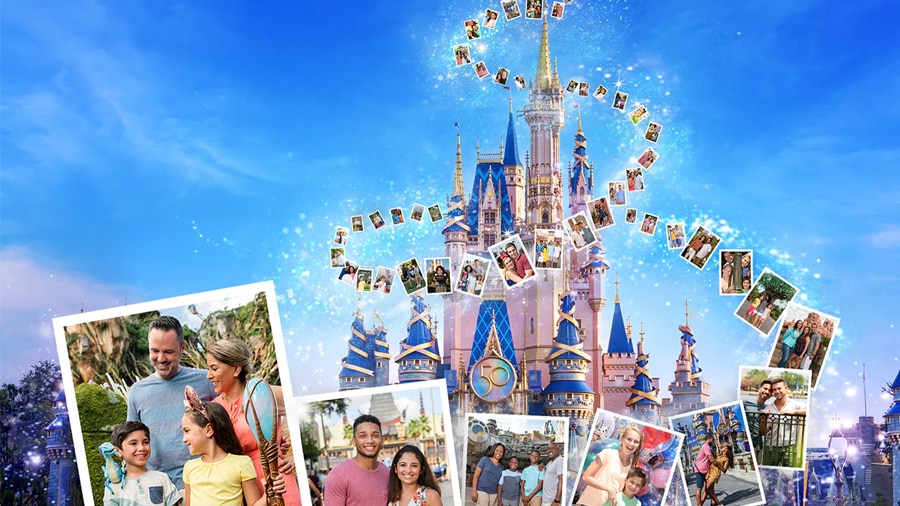
That was true with Disney’s forays into the metaverse, Cinderella Castle Mural of Memories NFT, Prime-Style Membership Program, AI Task Force, and so on and so forth. There have been so many tech-related initiatives that have been started and abandoned by Disney that I’ve honestly lost count. They are quick to chase fads, and equally quick to lose interest.
Even more narrowly, it seems that Disney now wants to be viewed as an artificial intelligence company. Or at least, AI-adjacent. There’s a lot of AI frothiness on Wall Street, and investors want every company to be an AI company. Hence the circularity of AI investments and eagerness of CEOs to leap at the “opportunity” to be associated with OpenAI. (A risk-free move that definitely will never, ever backfire.)
I am vehemently anti-AI. I do not use it as a consumer or writer, which might be hard to believe given the “quality” of some of the output here, but I assure you that’s the result of being a sleep-deprived parent (or getting a bit too liberal with copying & pasting press releases).
Artificial intelligence strikes me as one of those crutches that gets embraced without proper consideration of long-term consequences because it’s easy and efficient, but that ends up making us lazier, dumber and just generally worse off over time.
Then there’s what it does to us creatively. I worry about a future where human artists are marginalized even further than they already are, in favor of entering prompts into a machine. One problem (of many) with that, is that ChatGPT and these models aren’t making anything new. It’s all derivative. The models need to be trained on actual art, which needs to be created by a person. But how much less new art will be made when the incentive structure deteriorates thanks to AI?
AI “art” is also lacking in humanity. The sparks of personality, charm and character that define art created by actual people. That list of ~200 Disney characters would not exist in a world of pervasive AI “art.” There would be no Mickey Mouse, no Cinderella, no Stitch, and no Darth Vader in exactly the world we’re careening towards where art is a photocopy of a photocopy.
Disney can claim that this is being done to “advance human-centered AI that respects the creative industries and expands what is possible for storytelling.” But c’mon, does anyone really believe that?! Even the least-cynical reading of this deal that I can muster involves the creation of free user-generated content for Disney+, reducing the need for actual human-created programming.
This is not to say I’m a technophobe who is unequivocally opposed to AI. It’s a tool. And like any tool, there are both good and bad ways to use it. If Kaiser Permanente told me they were using AI as a diagnostic tool to reduce the burden on doctors, help relieve staffing shortages and waits, I’d probably be in favor.
There are a lot of industries where AI could be an asset, helping humans or addressing shortcomings, our aging population, etc. There’s also been a lot of fear-mongering about past about automation and other tools of progress, and most of it has been misplaced or overblown. Disruption always breeds distrust, often for good reason.
My narrow concern here is a creative company embracing something that is corrosive to creativity and the arts. Whatever the broader positive applications for AI, those are not relevant to Disney’s intellectual property. What is relevant is its tacit endorsement of a slop machine. This is at odds with the Walt Disney Company’s legacy.
Look, I understand Disney’s position in doing a deal like this with OpenAI. (Or at least, I think I do?) There’s a recognition that AI is here to stay, and those that don’t get on board are going to be left behind.
That partnering with OpenAI is good for business, and the stock price. That lawsuits are only forestalling the inevitable. Maybe this is even puts some guardrails on AI, providing a ‘compromise’ path forward.
I am somewhat sympathetic to this “if you can’t beat ’em (or stop ’em), join ’em” perspective. Even so, it seems like Disney is giving up a lot here while not gaining all that much. It’s not just the money, either.
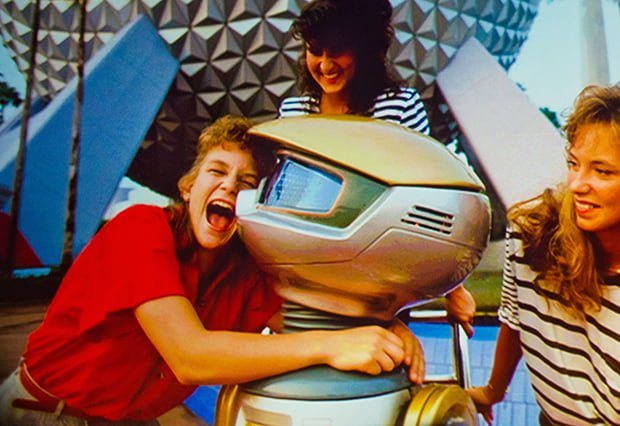
For one thing, there’s downside risk that this all goes off the rails and ends badly for Disney. (Risk that is not shared by OpenAI. They have no brand, no history, no nothing to protect.)
OpenAI has not demonstrated a deep commitment to user safety, IP rights, or anything except its own self-interest. They bear no reputational risk if or when users are able to exploit its models and create unsavory content with Disney characters.
To the contrary, this deal is all upside for OpenAI. Disney is the first legacy media company to strike a deal like this with OpenAI, meaning that Disney is also lending its storied 100-year-old brand to legitimize OpenAI. (As for the monetary component, I’d direct you to this piece: OpenAI Is Good at Deals.)
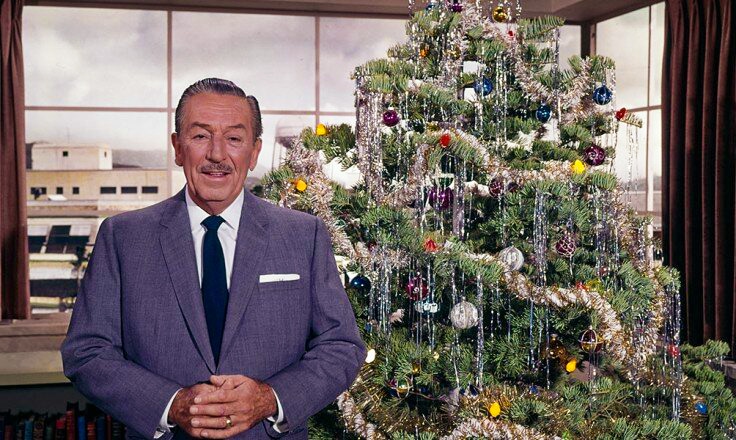
I firmly believe that the best way for current corporate leaders to be stewards of Walt Disney’s creative enterprise is to not jump into bed with AI companies. That this is one scenario where it’s not just okay to be behind the curve (whatever that even means) as a business, but that it is the ethically “correct” position to take as a creative company. That they should be fighting this encroachments on human creativity, as they have with the lawsuits and C&D letters.
Instead, the Walt Disney Company is entering a “landmark” deal to be the first major content licensing partner with OpenAI. An entity that is anathema to art and human creativity. Between the foundational nature of the Walt Disney Company and already-souring sentiment towards AI, this just strikes me as a misstep. But hey, at least it’ll be good for a 1% boost to the stock price for a day!
Need Disney trip planning tips and comprehensive advice? Make sure to read Disney Parks Vacation Planning Guides, where you can find comprehensive guides to Walt Disney World, Disneyland, and beyond! For Disney updates, discount information, free downloads of our eBooks and wallpapers, and much more, sign up for our FREE email newsletter!
YOUR THOUGHTS
What do you think of TWDC ending its partnership with OpenAI? Good news, or should Disney be part of the AI bandwagon? Are you impressed, underwhelmed, or terrified by AI? Do you agree or disagree with our assessments? Any questions we can help you answer? Hearing your feedback–even when you disagree with us–is both interesting to us and helpful to other readers, so please share your thoughts below in the comments!
